Archtypes
In this article, I provide a simplified overview of Jungian archetypes as reflected in my artwork. If you would like to learn more, I recommend exploring online resources or reading Jung’s work directly.
What is the role of Archetypes?
Archetypes are inherited patterns of thinking and feeling that live in the subconscious and are closely connected to our instincts. When an instinct arises, it can trigger archetypal thoughts or attitudes, often without our awareness. This response is then shaped by the conditioning we receive through our upbringing, both from family and society. Only afterward does conscious thought emerge, influenced by these forces.
As a result, our conscious thinking often contains tension and ambivalence. Our instinctual needs do not always align with the expectations placed on us by society.
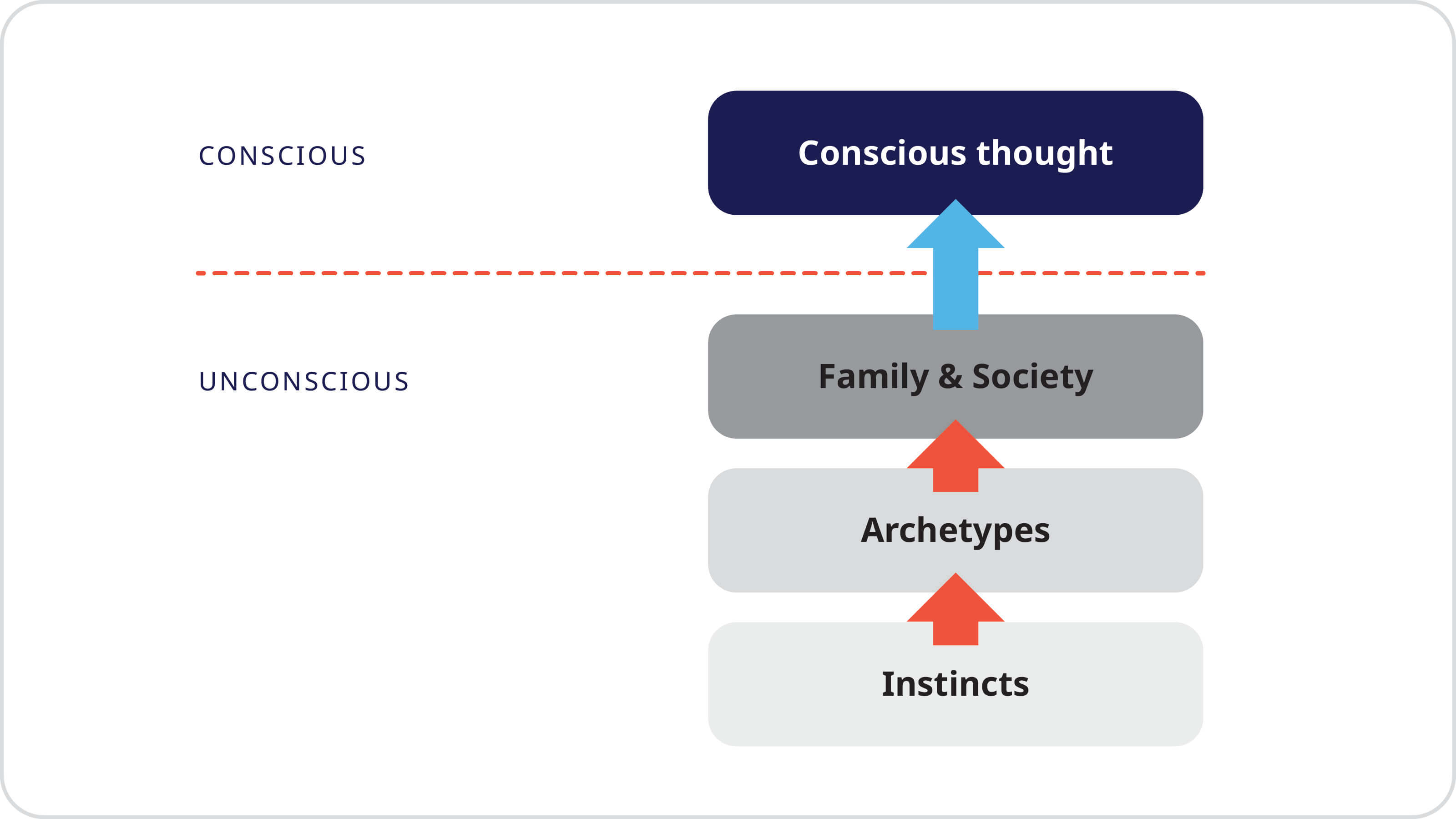
Corelation between instincts, archetypes and conscious though. Instinctive impulse is followed by the activation of archtype. Archetypal pattern of thinking is modified by social conditioning and finaly, and only after the conscious thought is shaped.

Corelation between instincts, archetypes and conscious though. Instinctive impulse is followed by the activation of archtype. Archetypal pattern of thinking is modified by social conditioning and finaly, and only after the conscious thought is shaped.

Corelation between instincts, archetypes and conscious though. Instinctive impulse is followed by the activation of archtype. Archetypal pattern of thinking is modified by social conditioning and finaly, and only after the conscious thought is shaped.
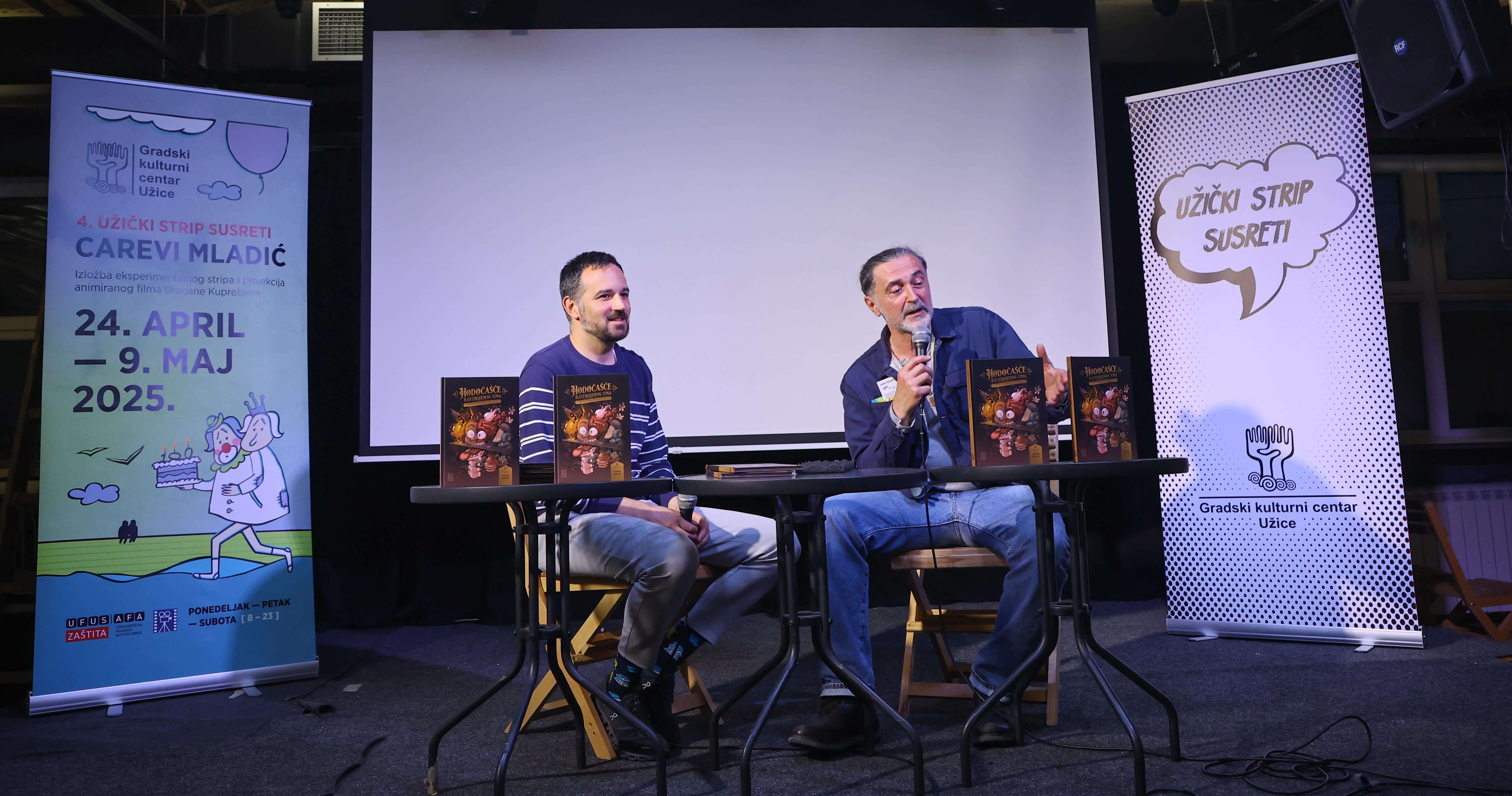


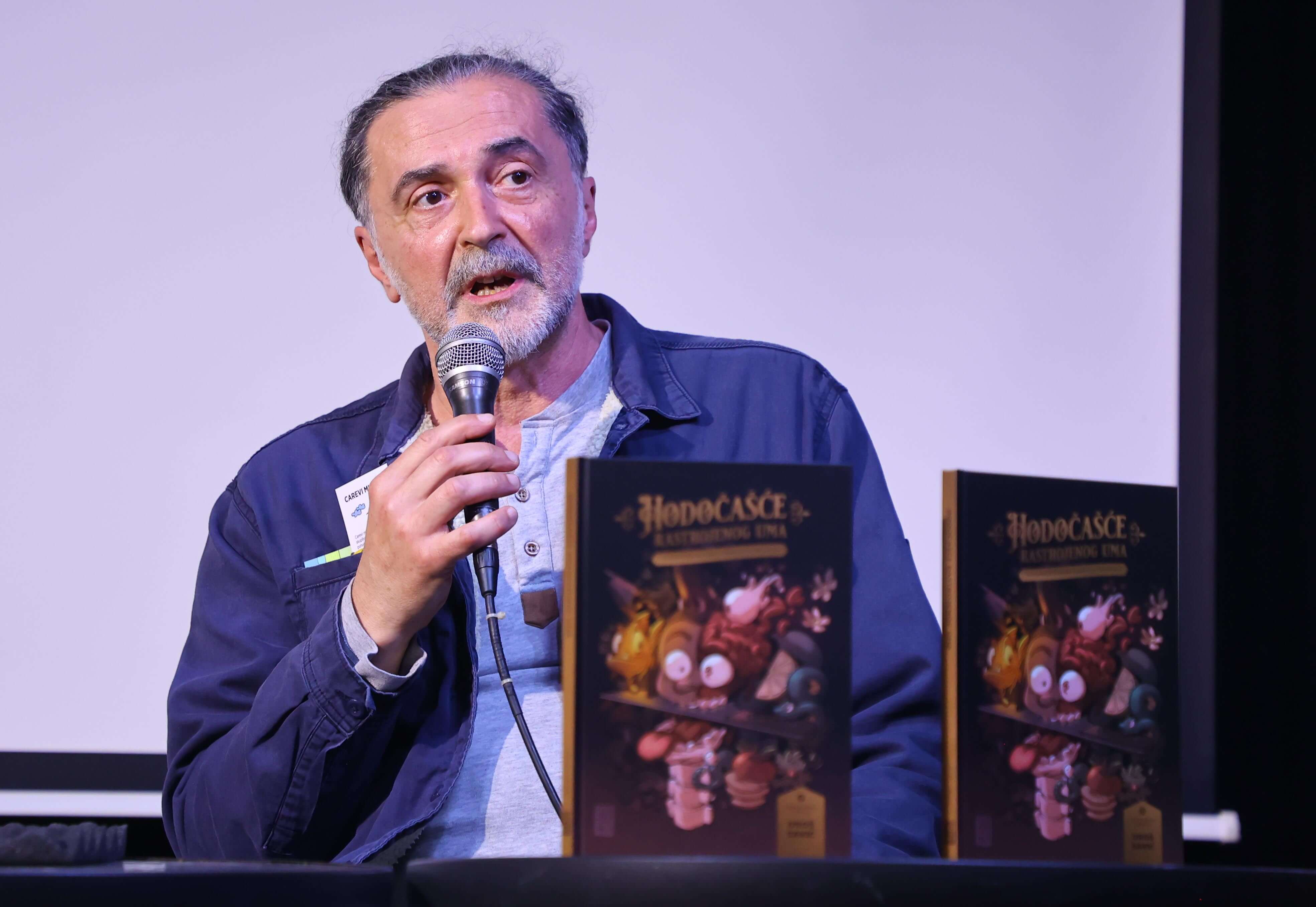
Photo: Dragan Karadarević
Illustration from Carl Jung's The Red Book. Foundation of the Works of C.G. Jung
The 67th International Belgrade Book Fair (19 - 27th of October, 2024)
For example, a young adult may feel a strong desire to fall in love or start a family, while social values encourage prioritizing academic success and career. We therefore make life choices while navigating the tension between what we deeply need and what we are expected to pursue.
In this sense, Jung’s teaching offers guidance on how to live with these opposites, both in our daily lives and within ourselves. And most importantly — how to make choices that would reconcile both.

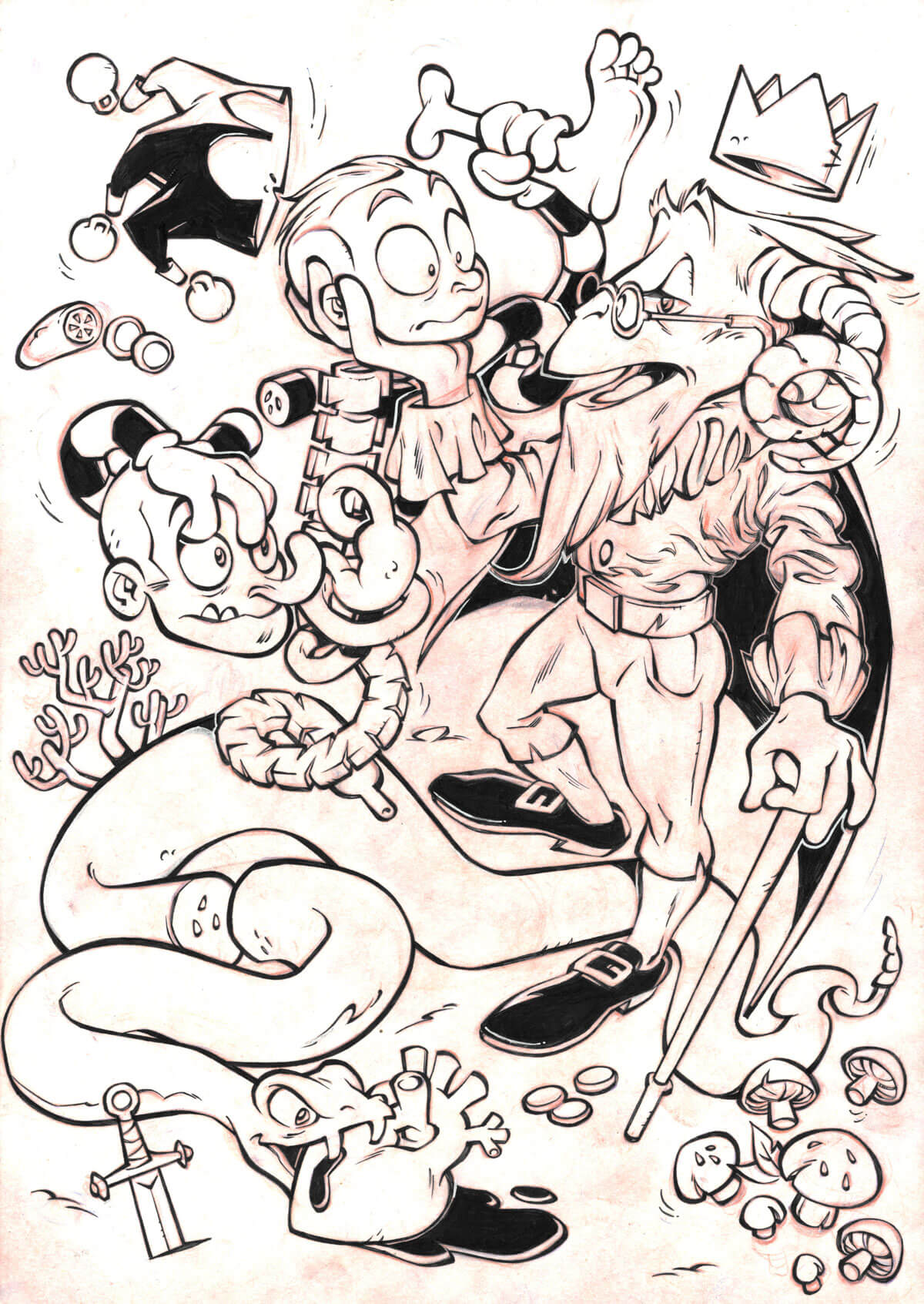
The Ruler, an artwork featuring representations of the Jungian archetypes: Ruler, Innocent, Trickster, Snake, and Heart.
The Ruler, an artwork featuring representations of the Jungian archetypes: Ruler, Innocent, Trickster, Snake, and Heart.
Corelation between instincts, archetypes and conscious though. Instinctive impulse is followed by the activation of archtype. Archetypal pattern of thinking is modified by social conditioning and finaly, and only after the conscious thought is shaped.
Photo: Dragan Karadarević
Illustration from Carl Jung's The Red Book. Foundation of the Works of C.G. Jung
The 67th International Belgrade Book Fair (19 - 27th of October, 2024)
The Ruler
The goat represents the Ruler archetype, symbolizing order, law, and structure. He values logic and dismisses emotion, both in himself and in others. Without compassion, he becomes a tyrant who governs through fear.
In this work, the Ruler represents the expectations imposed by society, authority figures, and even ourselves — ideals we internalize but often cannot meet, creating anxiety and despair.
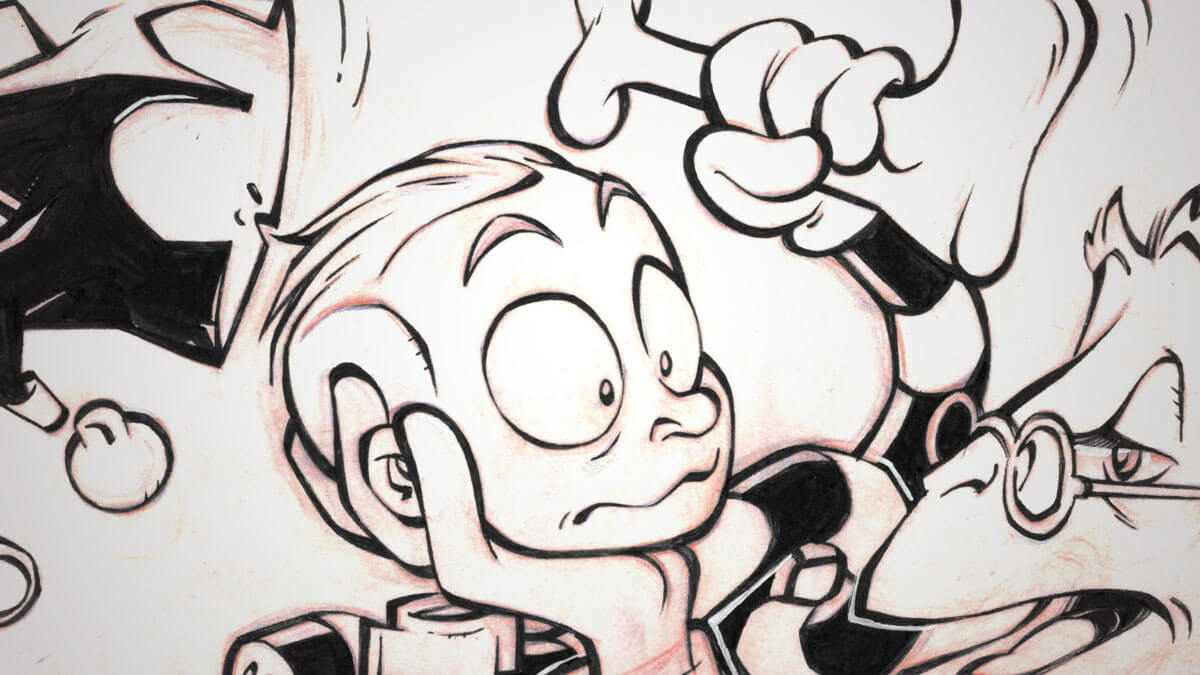
Archtype of the Innocent.
Archtype of the Innocent.
Corelation between instincts, archetypes and conscious though. Instinctive impulse is followed by the activation of archtype. Archetypal pattern of thinking is modified by social conditioning and finaly, and only after the conscious thought is shaped.
Photo: Dragan Karadarević
Illustration from Carl Jung's The Red Book. Foundation of the Works of C.G. Jung
The 67th International Belgrade Book Fair (19 - 27th of October, 2024)
The Innocent
The Innocent seeks happiness and a paradise on earth. Optimistic and lighthearted, he can also be naïve and unprepared for hardship. Gripped by the cold hand of the Ruler, the Innocent becomes stunned and fearful, eventually transforming into the Coward—obedient and silent, afraid to challenge authority and risking the loss of his own identity.
This symbolizes the sacrifices we make to fit in. In seeking acceptance from the herd, we often abandon our individuality.
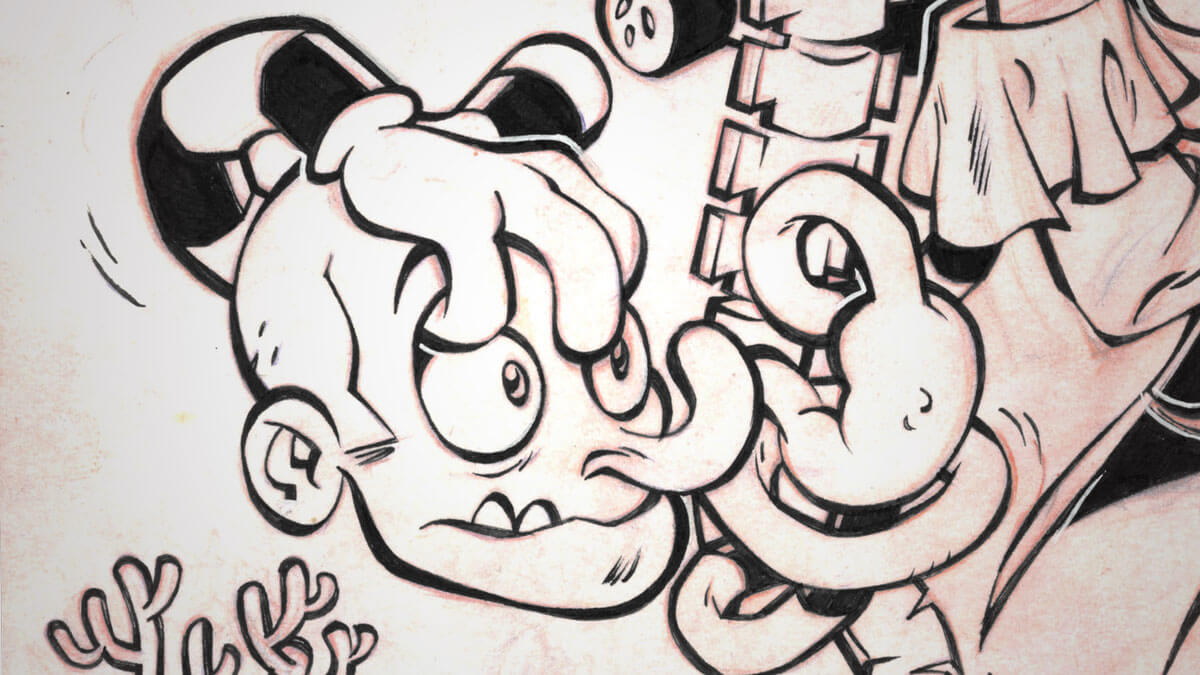
Trickter archtype.
Trickter archtype.
The Trickster
The positive aspect of the Trickster archetype lies in its role as a catalyst for change, creativity, and necessary disruption. By breaking rigid structures and challenging norms, the Trickster exposes flaws in authority, sparks innovation, and encourages resilience and adaptability.
Here, however, the Trickster is suppressed by the restless and inhibited nature of the protagonist, who neglects his instincts. Though he has lost his jester’s hat, he remains near protagonist’s dismantled intestines — a stark reminder to listen to his gut.
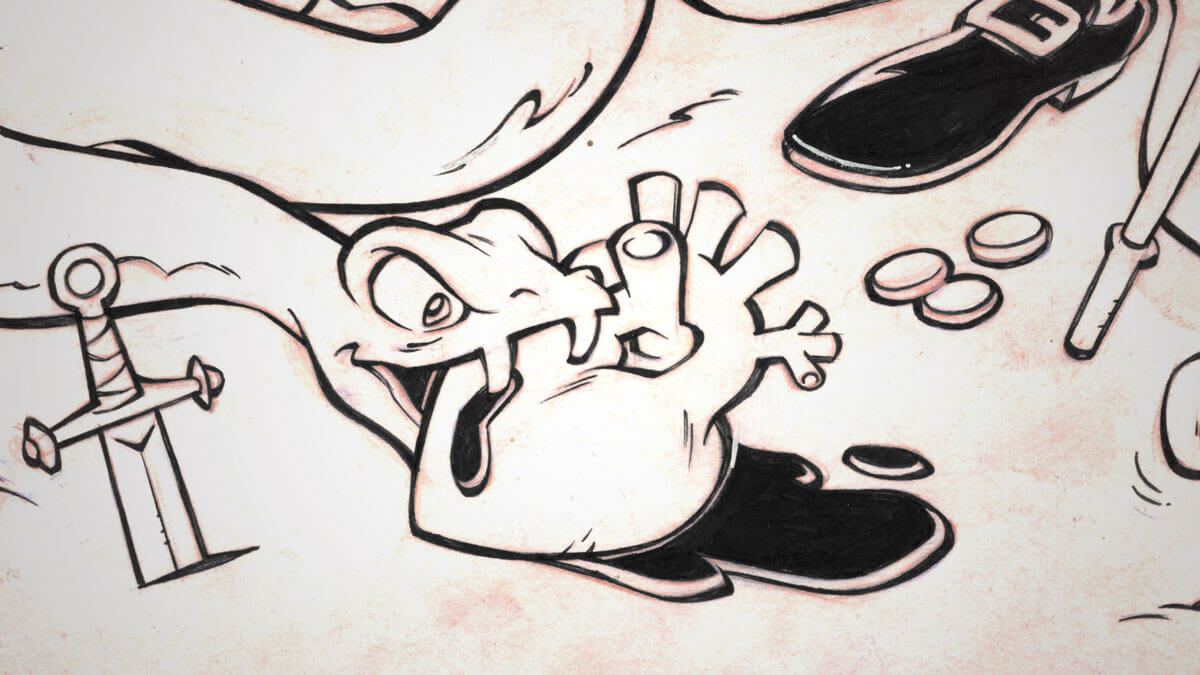
The Snake archtype with the symbol of a rotten heart.
The Snake archtype with the symbol of a rotten heart.
Corelation between instincts, archetypes and conscious though. Instinctive impulse is followed by the activation of archtype. Archetypal pattern of thinking is modified by social conditioning and finaly, and only after the conscious thought is shaped.
Photo: Dragan Karadarević
Illustration from Carl Jung's The Red Book. Foundation of the Works of C.G. Jung
The 67th International Belgrade Book Fair (19 - 27th of October, 2024)
The Rotten Heart
Any positive evolution of a character begins with the desire to change. It stems from a heart full of love, toward the world and toward oneself. The heart of the main character, however, is poisoned by fear and doubt. The body rejects this old heart, which has been bitten by the snake — a symbol of transformation. This scene heralds an anticipated new beginning and the rebirth of the character’s personality.
The Snake
The Snake sheds its skin, which serves as a powerful metaphor for personal growth and renewal. Snakes are both threatening and healing — they bite (poison), yet the bite can trigger transformation, leading to cure, enlightenment, or growth. In psychoanalysis, animals represent instincts. The need to transform and evolve is an instinctual one. The desire for change can be contemplated, but the initiation must come from within — it cannot be acknowledged by logic alone.
Conclusion
In essence, this artwork reflects an inner tension present in each of us—the uneasy coexistence of two archetypes: the Trickster and the Ruler. The Trickster embodies creativity, joy, and pleasure, yet is often suppressed to make space for the Ruler, who governs order, achievement, and productivity.
This tension feels deeply familiar in modern life. We allow ourselves moments of playfulness and ease only when the Ruler’s critical voice softens—when our inner master is momentarily satisfied, no longer judging us for simply being, for allowing ourselves to enjoy life.
Corelation between instincts, archetypes and conscious though. Instinctive impulse is followed by the activation of archtype. Archetypal pattern of thinking is modified by social conditioning and finaly, and only after the conscious thought is shaped.
Photo: Dragan Karadarević
Illustration from Carl Jung's The Red Book. Foundation of the Works of C.G. Jung
The 67th International Belgrade Book Fair (19 - 27th of October, 2024)